Machine Thinking
The Next Frontier of Intelligence.
What if machines could do more than recognise patterns? What if they could think, generate independent ideas and understand things they have never been explicitly trained to recognise?
This is the breakthrough behind Xephor.
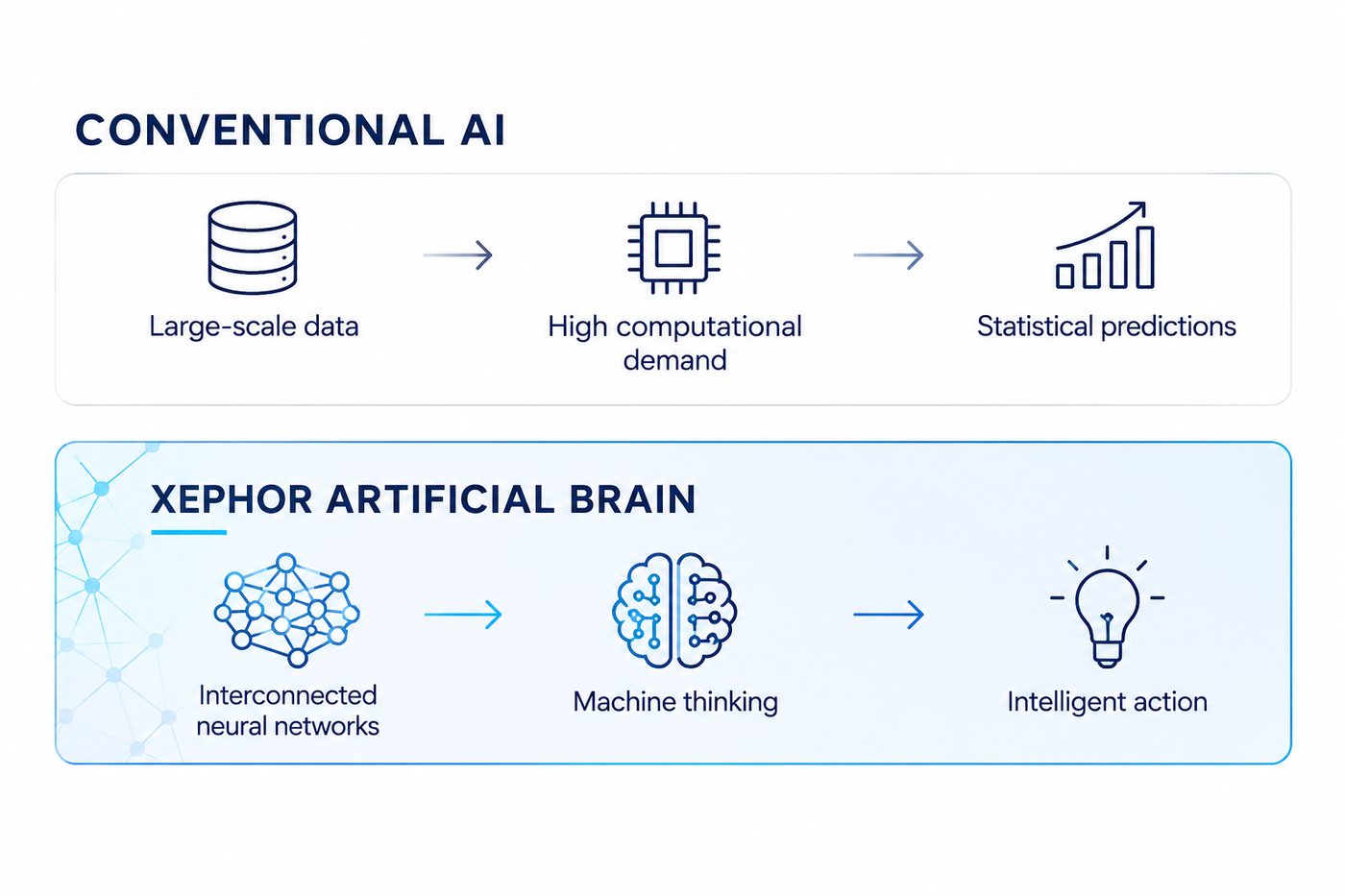
For decades, Artificial Intelligence has been built around teaching machines what to recognise. Neural networks learn from enormous amounts of labelled data, adjusting millions of parameters until they can reproduce the answers they have been trained to provide. The results are impressive. But they come with a fundamental limitation: when confronted with something genuinely unfamiliar, conventional AI often struggles.
Human intelligence works differently. We recognise underlying concepts, transfer knowledge between seemingly unrelated situations and make sense of unfamiliar information without having to be trained on every possible variation.
Xephor set out to recreate this fundamental capability.
An Artificial Brain, not another AI model.
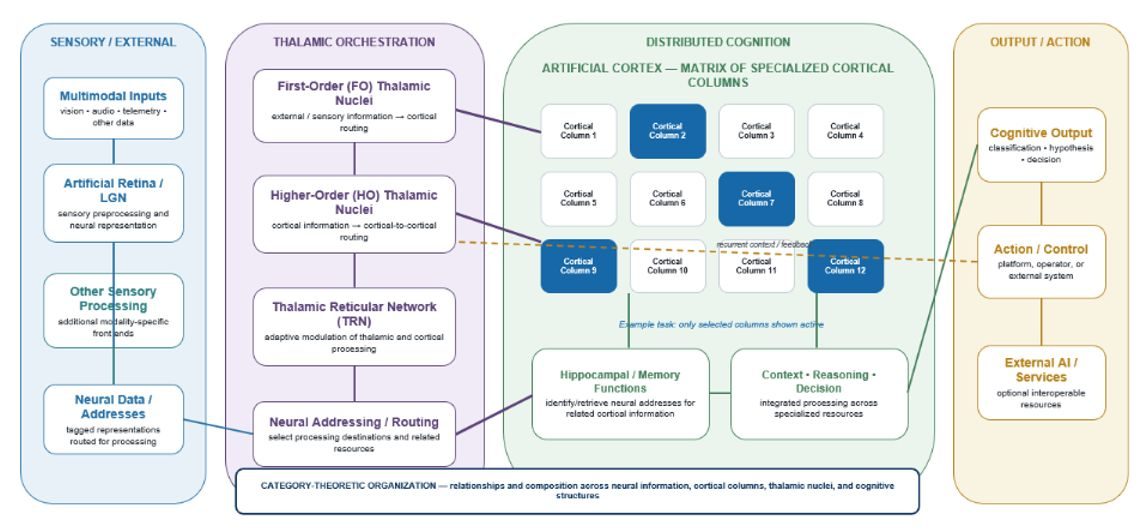
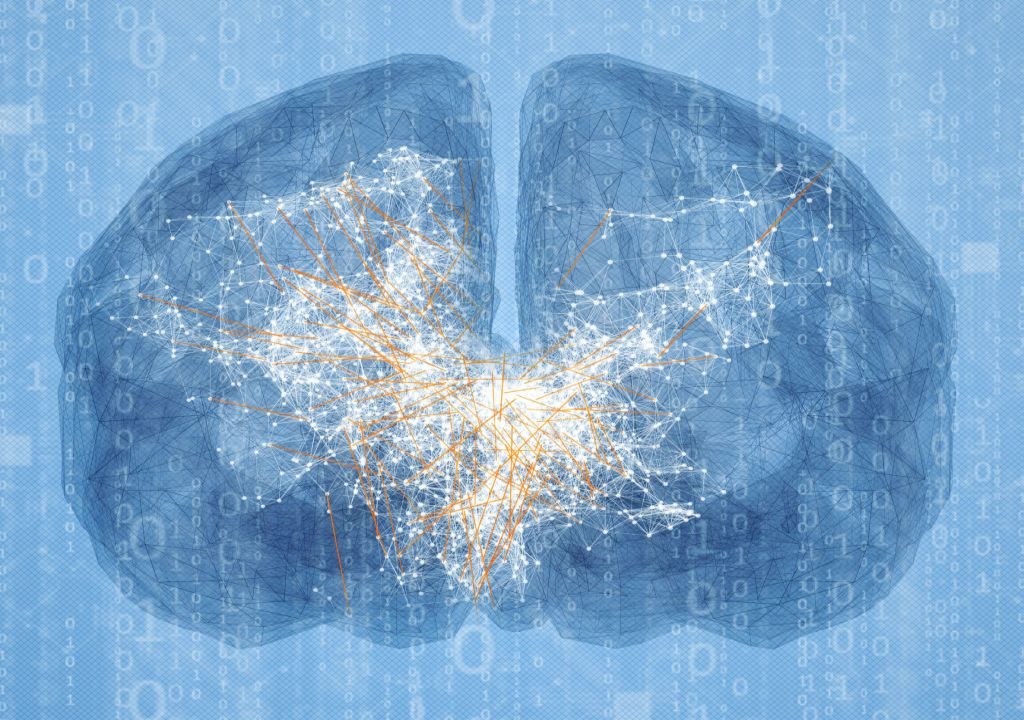
Inspired by the architecture of the human brain, Xephor developed an Artificial Brain comprising thousands of interconnected neural networks, organised into specialised neuronal columns. Each column is responsible for a specific task, continuously monitoring incoming information for patterns and concepts it can process.
But the real breakthrough lies in how these neural networks work together.
Using principles from mathematical category theory, Xephor organises neuronal columns into larger functional units. Knowledge acquired by one unit can be transferred to another through shared categorical structures. This enables the Artificial Brain to learn beyond individual training examples and apply acquired knowledge to unfamiliar situations.
Consider a simple example: a logistics centre needs to recognise and sort packages. Conventional AI may require extensive training to recognise different shapes, colours, sizes and damaged packaging. Xephor’s architecture takes a different approach. Once one group of neuronal columns has learned the underlying concept of a package, related knowledge can be transferred to other functional units. Recognising a previously unseen or irregularly shaped package no longer has to start from scratch.
This is machine thinking: moving beyond memorised patterns towards transferable knowledge, independent idea generation and intelligent responses to unfamiliar situations.
Not simply more data. Not simply bigger models. A fundamentally different architecture for artificial intelligence.
Xephor is building the next generation of machine intelligence.